Sealing is the last decision that still belongs to the pour, which is why this essay lives with decorative work rather than with the structural desk. A sealer will not thicken a thin slab, will not invent fall, and will not talk a clay site out of moving. What it can do is darken a face, keep an oxide from looking thirsty, make an exposed aggregate easier to sweep, and — if you choose badly — trap a damp Hunter driveway under a skin that then lets go in sheets.
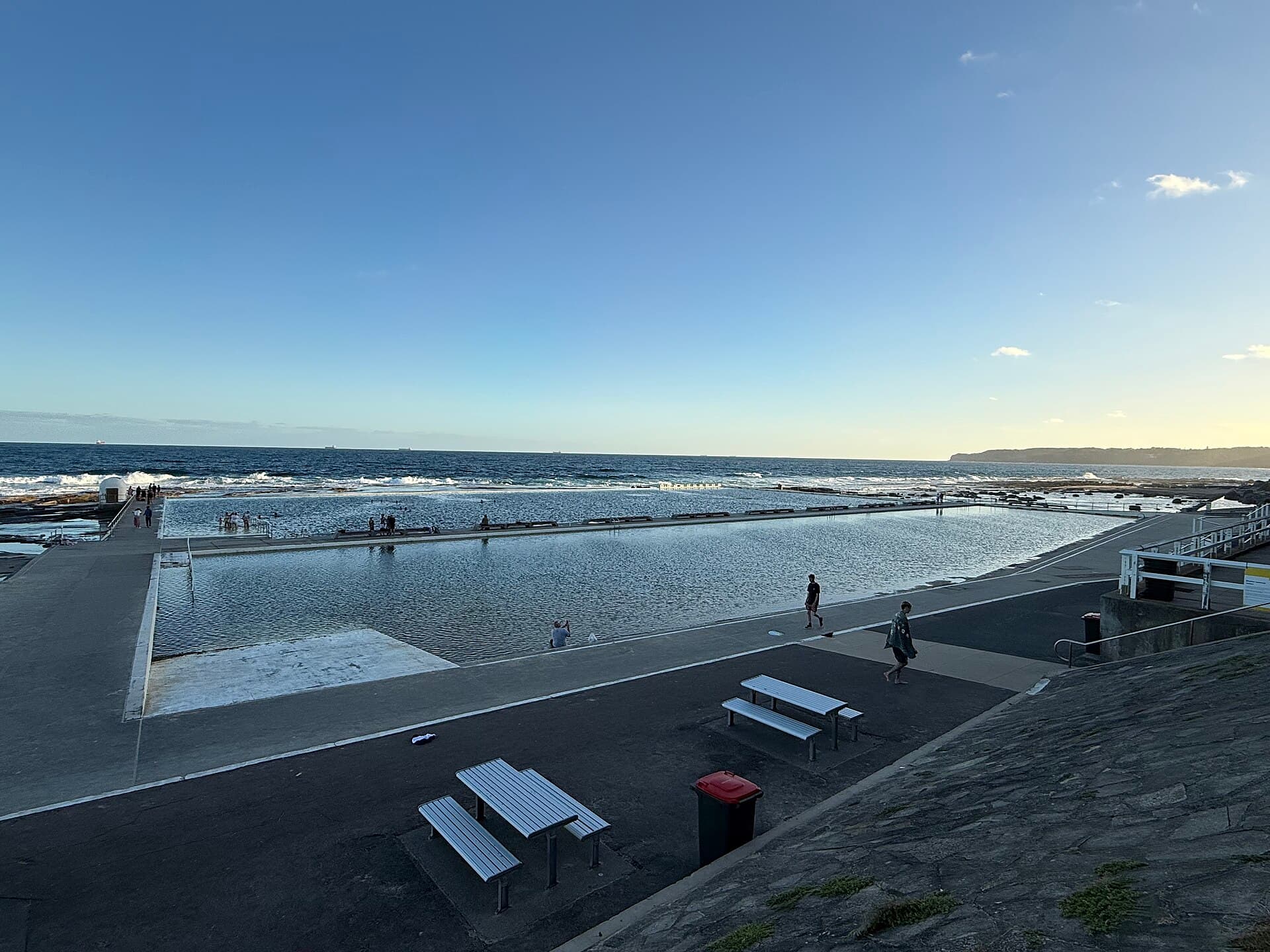
The coast gets a vote. Ultraviolet at Merewether is not a theoretical. Salt air at Stockton is not a slogan. A product that behaved on a dry courtyard west of the range will not automatically behave on a slab that spends July in a mist and February in a glare. Read this next to coastal durability if the house can taste the harbour.
Two families, not a thousand brands
Sealers, for a homeowner’s purposes, come in two tempers.
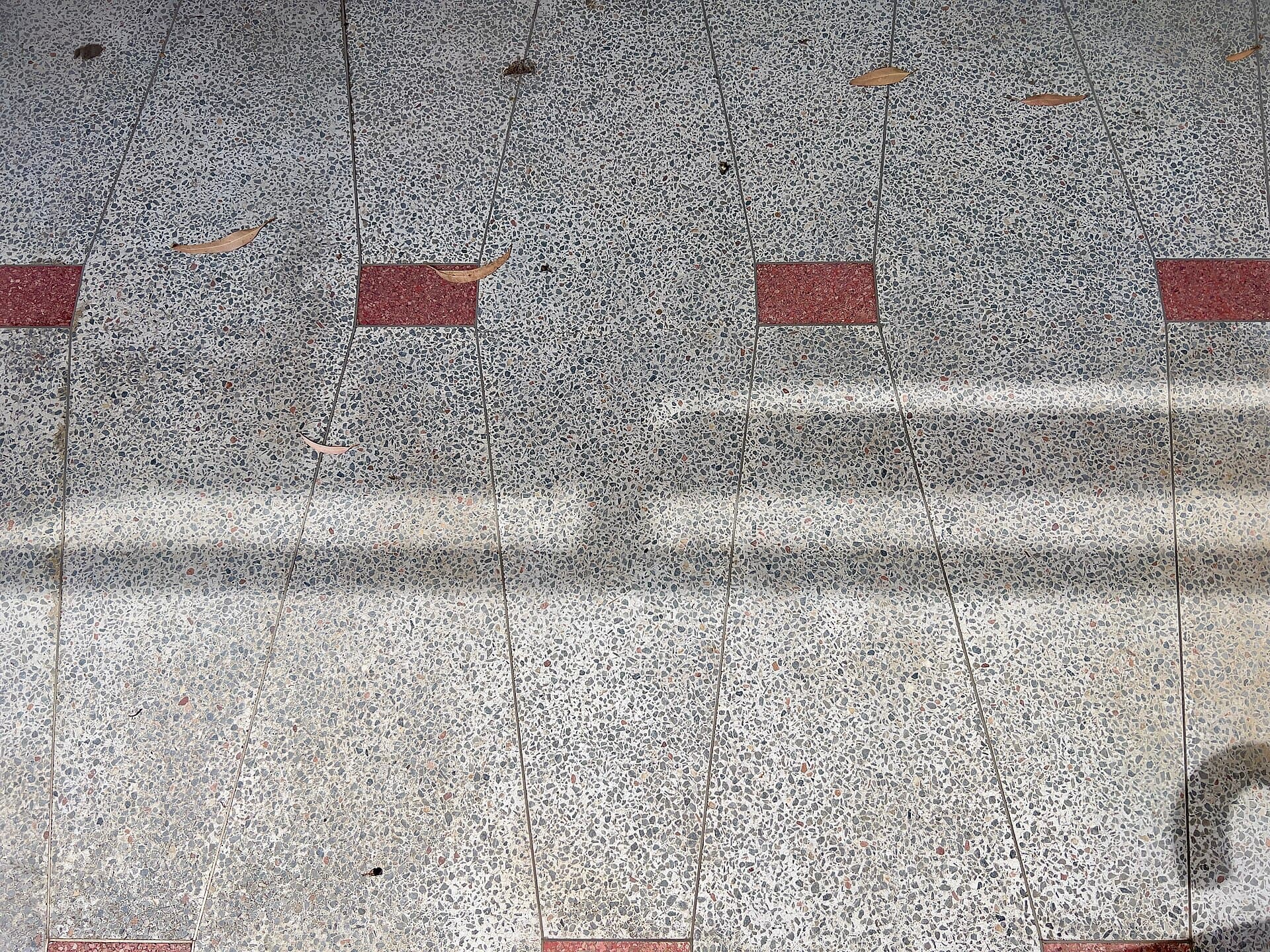
Penetrating sealers — silanes, siloxanes, some silicates — go into the pore and leave the face looking like itself, or only slightly enriched. They are not a varnish. They reduce how easily water and some stains wander in. They do not, as a rule, give you a wet look, a high gloss, or a plastic sheen you can see from the street. They are the quieter choice, and on this coast they are often the more durable one, because there is less film for the sun to eat.
Film-forming sealers — acrylics, some polyurethanes, various hybrids sold as “wet look” — sit on the surface as a coating. They can deepen colour the way a wet stone deepens, hide a little of the chalkiness of a new oxide, and make sweeping easier. They can also blush, peel, go white in puddles, and wear to a path where the bins are dragged. They are a finish. They need maintenance the way a timber deck needs maintenance, except that people forget concrete is being asked to do the same work.
Densifiers sit in a neighbouring conversation. If the job is industrial, leave this essay for warehouse floors. A lithium silicate on a forklift aisle is not a wet-look acrylic on a courtyard.
Brand names matter less than the family and whether the last person on the slab already left a film you cannot see. Putting a penetrating sealer over an old acrylic is how you buy a failure that looks like a stain.
The wet look is a promise with a climate
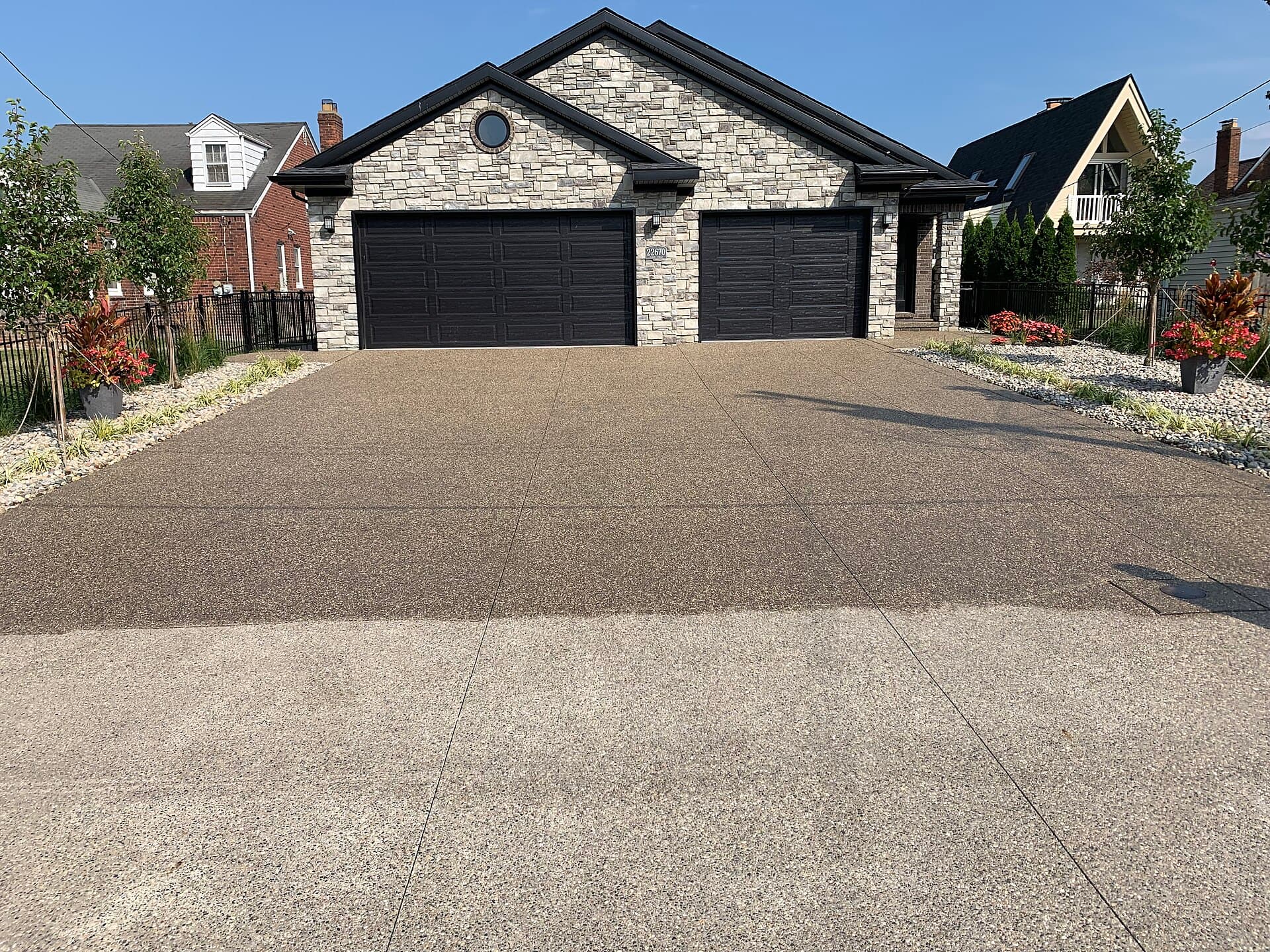
People ask for the wet look because a freshly washed exposed driveway is a handsome thing. Water is the original sealer. A film tries to freeze that moment. On a still April afternoon in a shaded Hamilton courtyard, it can hold. On a west-facing Merewether apron in January, the same film is in a conversation with ultraviolet, heat and the odd salty shower.
Acrylics are the common domestic wet-look. They are relatively easy to apply and relatively honest about needing a recoat. In a protected yard you might see two or three years. On an open coastal driveway you might see a year, or a season, before the traffic lanes go dull and the edges still look freshly dipped. That is not always a defective product. It is a product doing outdoor work in New South Wales.
Darker oxides show the wear first, because the contrast between sealed and tired is a stripe. If you are choosing colour, read oxides and stains before you lock yourself into a charcoal that will telegraph every missed recoat. A lighter aggregate can wear more kindly.
Solvent-borne films often look richer on day one. They also smell like a decision the neighbours will notice, and they can be less forgiving on a damp base. Water-borne films have become more respectable. Neither is “the good one”. The good one is the one matched to the slab, the weather and the person who will actually recoat it.
Breathability is not a metaphor
Concrete holds water and then tries to get rid of it. A new slab is a reservoir. An old slab on Hunter clay can still be a reservoir after rain. A film that is too tight, applied too soon, or applied to a face that is still dark with moisture, will blush — a milky cloud that people mistake for a bad batch of sealer. It is often steam that had nowhere to go.
Penetrating products leave more of that conversation intact. They are not a licence to seal a pond. They are less likely to make a drum skin over a damp pour. If the slab must breathe because it sits wet, or because it is a ground-bearing floor in a coastal house that you hope to keep as a mineral surface, a heavy wet-look film is the wrong ambition.
Internal polished slabs are a different finish. Polished floors in coastal homes are about grinding and densifying as much as about a topical sealer. Do not treat a driveway acrylic as indoor advice.
Recoat cycles on this coast
Assume a film-forming sealer on an outdoor Hunter slab is a maintenance item, not a permanent upgrade. Test a small patch when the water stops beading and the colour looks thirsty. Do not wait until the film is peeling; peeling means you are now in removal, which is a different invoice.
Preparation for a recoat is most of the job: wash, degrease if the car has been dripping, kill mould if the shaded edge has gone green, and sand or chemically key if the manufacturer says so. Putting a new film on a dirty old film is how you laminate the grit. Cleaning oil and mould is the unromantic companion.
Penetrating sealers ask for a longer cycle and a different test. You are watching absorption, not gloss. When a rain shower darkens the slab in a way it did not last year, the pores are open again. Recoating a penetrating product is usually simpler, provided the surface has not since been painted with a film by a well-meaning predecessor.
Write down what was used. A driveway with an unknown history should be a test patch, not a full afternoon of product.
Coastal ultraviolet is a materials fact
The same sun that fades a cheap oxide attacks a cheap film. South-facing courtyards in Cooks Hill have an easier life than a north-west driveway in Merewether with no tree. Salt does not help a failing acrylic; it finds the edges of the peel and lifts them.
If the slab is within smell of the ocean, prefer a product that has been sold for coastal external work, not for an inland garage. Ask about UV stability the way you would ask about a paint. If the seller talks only about gloss, they are selling day one.
A penetrating sealer will not stop heat and UV fading. Nothing topical fully will. It may slow the thirsty look. An oxide that was always going to go pale will still go pale. Design for that, or accept the recoat as part of the colour.
When not to seal a damp slab
Do not seal a slab that is still obviously giving up water. Dark patches that return after a dry day, a plastic sheet test that comes up wet, a pour that happened last week, a winter driveway that has not had a string of dry days — these are reasons to wait. The Hunter will give you damp. Waiting is cheaper than stripping.
Do not seal a slab that has been under a low and has not dried in the body. Stormwater after east-coast lows leaves water a broom cannot reach. Do not seal over laitance, a dusty January finish, or a curing compound you have not identified. Do not seal a slab you intend to overlay or grind soon. You will be putting a bond-breaker on your next job.
Do not seal because a quote bundled “seal included” on the afternoon of the pour. That line item is often a light acrylic on a still-green face, sold as completion. It can work on a dry, late-summer slab that has had a week. It can fail on a July pour that looks dry only because the wind is cold. A good crew will tell you the sealer is a return visit. Choosing a concreter includes noticing who wants to leave a film on a damp Thursday.
How to decide without a brochure
Ask what you want the slab to do. If you want it to look like wet stone, you are in the film family and you are accepting a recoat. If you want it to stain less and stay itself, you are in the penetrating family and you are accepting a quieter aesthetic. If you want both forever, you want a product that does not exist.
Ask how old the concrete is, what is already on it, and whether the ground still wets the face after rain. Ask whether the finish is broom, trowel, exposed or stamped — stamped courtyards hold sealer in the pattern and show wear on the high points first. Ask who will do the next coat, because a sealer without an owner is just a delay.
Then wait until the slab is actually dry. On this coast that sentence is the whole craft. The pour was the short day. The sealer is a later morning, with a product you can name, on a face that has finished breathing out the harbour’s weather. Anything sooner is optimism in a tin.