Curing is the most skipped hour in a Newcastle pour and the one the climate most enjoys punishing. The truck leaves, the surface looks closed, someone sweeps their tools into the ute, and the afternoon wind comes up off the harbour. By morning the slab has a dusty skin and a set of parallel tears that will be called “character” in the quote for the epoxy.
This desk treats curing as part of slabs and foundations because a slab that is not cured is not the slab on the drawing. Strength, dusting, plastic shrinkage and the way a later sealer behaves are all decided while the concrete is still a wet stone trying to become a dry one.
Curing is not drying
The words get swapped in yards and living rooms. Drying is the loss of water. Curing is the management of water and temperature so the cement can hydrate. If the surface dries too early, hydration at the top stops and you get a crust over a still-green core, or a crust already micro-cracked.
A slab can be too dry at the surface and too wet in the middle at the same time. That is the usual state of a January pour in Adamstown that was left open because “it’s humid”. The air feels wet on your neck. The slab is a dark heat-sink with a breeze across it. The breeze wins.
Humidity is a statistic. Wind on a warm slab is a fact. Cure for the fact.
AS 3600 and the guidance around it talk about keeping concrete moist and at a sensible temperature. For ordinary residential work, seven days is the number on the job sheet. High-early mixes and hot weather change the details, not the principle: the surface does not get to dry because the crew has gone.
The nor-easter is a drying machine
Newcastle’s north-easterly is the summer breeze people move here for. It is also a reliable evaporative fan. It arrives in the afternoon, runs up the beaches from Merewether toward Stockton, and finds every open garage, every new driveway, every courtyard that was poured at 11am because that was when the plant could deliver.
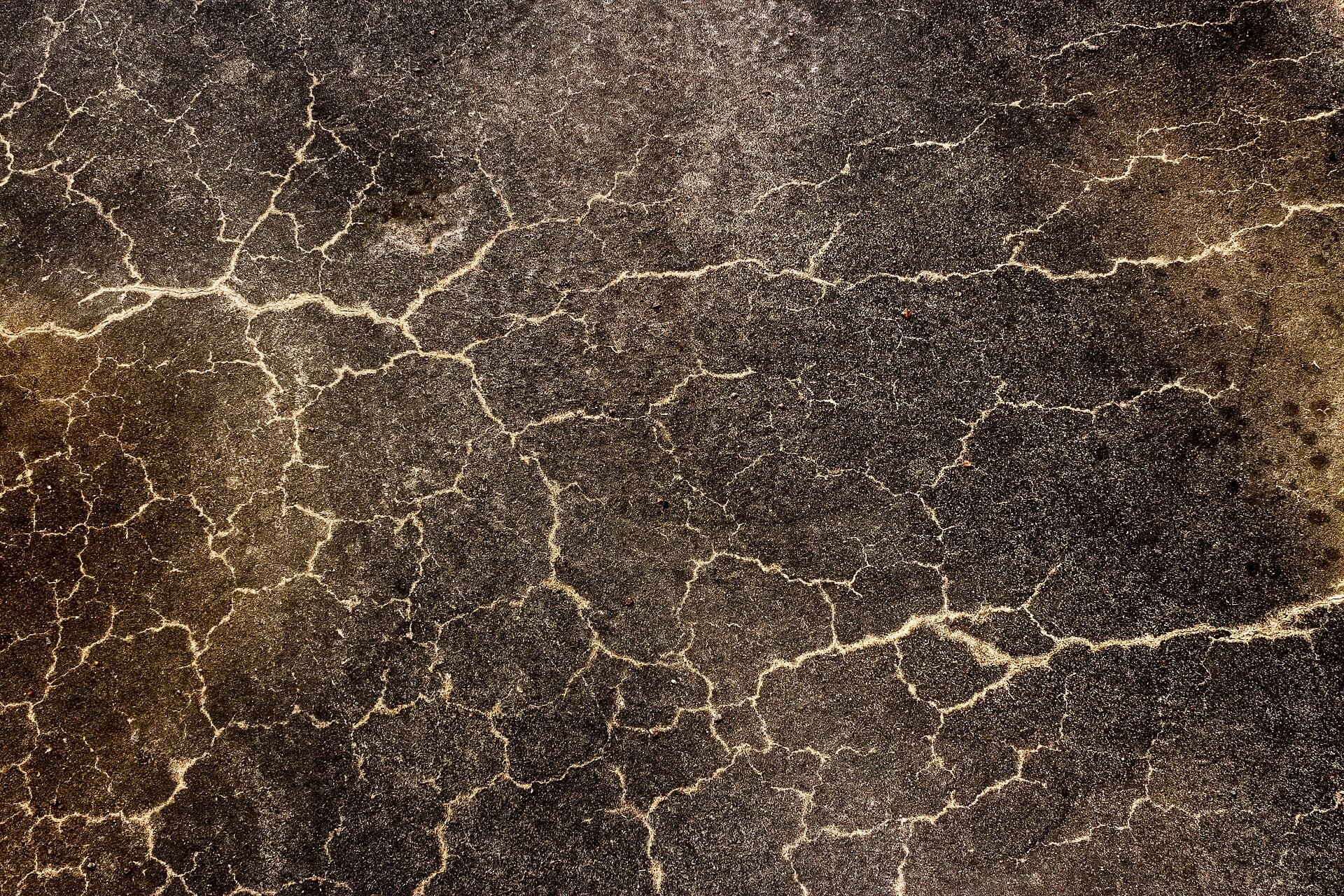
A nor-easter on a 32-degree day will skin a slab that felt safe at lunch. Plastic shrinkage cracks — the shallow, parallel tears — are the signature. They show up on garage floors and on house slabs whose edge beams were left uncovered while the field was being bull-floated. The wind does not need to feel “hot”. It needs to move.
Winter is not the holiday. A dry westerly in August, low humidity, a slab poured in weak sun: evaporation still happens, only slower, and the crew is more likely to skip the covers because the day feels gentle. Curing compounds still earn their keep in July.
East-coast lows flip the problem. You may be curing against rain as much as against drying — protecting a fresh surface from cratering, then making sure the covers do not blow into the neighbour’s yard. That is still curing. It is just curing with sandbags.
January heat, and the slab that cooks before lunch
Hunter January is not Darwin, but it is enough. Dark forms, a bare sand base, a western wall already built: slab temperatures climb past the air temperature. Hydration accelerates, then the surface races ahead of the core. You get a mix that sets underfoot while the chute is still in the last bay. Finishers add water to keep a cream, and that water is the future dust.
Practical replies, none of them glamorous:
- Pour at first light when the plant and the traffic allow it.
- Dampen the subbase so it does not suck the first moisture out of the mix. Damp, not ponded.
- Shade if the pour is small enough to shade. A new courtyard in Cooks Hill can take a shade cloth. A house raft cannot. Plan the day instead.
- Do not add water on the slab to “keep it alive”. Ask for a mix that matches the day.
- Get the curing on as soon as the surface will accept it. Waiting until knock-off is waiting until the damage is done.
On a house slab on clay, January heat has a second cost: the perimeter ground can dry and shrink while the slab tries to sit still. Keep the concrete moist without turning the edge into a swamp. That is why this essay sits beside house slab types.
Plastic, wet hessian, compounds
Three methods that actually work
There are a few honest methods. Pick one and do it completely. Half-cover is a wind tunnel.
Plastic sheeting is the backyard standard and a good one if it is lapped, weighted, and put down before the surface dries. White plastic reflects. Black plastic on a January slab is an oven; use it with care or not at all in midsummer. The failure mode is the sheet that balloons and flaps, polishing some bays and leaving others bare.
Wet hessian (or wet geotextile) is older and, when kept wet, excellent. It wants a hose and someone who will come back. A hessian that dries on the slab becomes a wick in the wrong direction — it pulls water out. In a coastal afternoon you may need to re-wet twice. That is labour. It is cheaper than a dusting floor.
Curing compounds are the commercial default. Spray a membrane onto the closed surface. Done well, they are even and they stay. Done badly, they stripe, they miss the edges, and they leave a residue that later fights the sealer or the polish. If the floor will be polished or coated, say so before the compound is chosen. Some products are designed to dissipate. Some are not. The data sheet is not decoration.
Water ponding — a lip of sand and a shallow flood — still works on flat work if you can control the edge. It is rare on a house raft and common on a small pad. Do not pond on a slab that has nowhere for the overflow to go except the neighbour’s garage.
A note on “curing with the sea air”: salt does not hydrate cement. Salt on a young surface is a durability insult, especially near Stockton and Newcastle East. If you want the longer argument, it is in salt air and concrete durability on the Newcastle coast. Keep new work under cover, not under spray.
Why seven days matters
The first day decides the skin. The first week decides whether skin and core have hydrated together. Strength gain continues for months, but the slab is most willing to lose its surface in the week nobody wants to think about.
Seven days is a discipline, not a superstition. A cool June week may hide what you lost. A hot, windy week may need more. The slab does not care about the plasterer’s booking.
What happens if you cut it short:
- A dusty surface that will never quite take a sealer evenly.
- Plastic-shrinkage maps that become the first thing a buyer’s inspector photographs.
- Weaker cover over the mesh, which is how rust gets a head start in a coastal garage.
- A courtyard that looks fair at handover and fades into a chalky field by the second summer.
Curing is also the start of the moisture story for later finishes. A polished floor or a topical stain wants a slab that has dried to a sensible vapour level after it has been cured. Cure first, dry second. People invert this and then blame the stain. Coloured concrete is unforgiving about that order.
Coastal humidity myths, listed so they can be retired
- “It’s muggy, so we don’t need to cover.” Muggy air over a hotter slab is still a drying gradient. Cover.
- “The overnight dew will cure it.” Dew is a film. It does not replace a method, and it arrives after the afternoon has already done the harm.
- “A light hose at knock-off is enough.” A hose at knock-off that is then left to a dry wind is a brief interruption of drying. Keep the moisture there.
- “Compounds are cheating.” Compounds are a method. Cheating is calling the job done when the surface goes dull.
- “Curing is only for architectural slabs.” Structural cover, garage dusting and driveway scaling are all curing stories. The decorative yard notices first because it is looking. The house slab notices later, in the cover meter.
If you are briefing a crew, put the method in the quote. “Cure seven days, plastic / wet hessian / named compound, edges included.” Ask who comes back on day two. A pour with no curing line-item hopes the climate will do unpaid work. In this city the climate has other jobs. It will not babysit a slab.
Curing is unphotogenic and it is why a good mix becomes a good floor. Spend the week. The nor-easter does not care that the Bureau called the day humid. Cure as if the wind had a key to the site. It does.