The pour is a morning. The site is a week. Anyone who has watched a mixer back down a Hamilton lane already knows which of those two can ruin the other. Preparation is pegs, boxing, a base compacted on purpose, a decision about moisture, a map of other people’s pipes, a place to wash a chute, a conversation with the neighbour, and a plan for the cloud that is still offshore at dawn.
This essay sits in planning and costs because the unglamorous week is where money is saved or set on fire. Once the concrete is in the box, you are watching chemistry. Before that, you are watching carpentry and dirt.
Pegs are an argument about the finished surface
A peg with a mark on it is a claim: the slab will be this high, it will fall this way, and it will meet that door, that garage, that council crossing. If the pegs are casual, the slab will be casual. In the Hunter that usually means water finding a bedroom, a shed door that scrapes, or a driveway that ponds against the house instead of running to the street.
Walk the levels with whoever is responsible for them. On a falling block in Kotara or New Lambton Heights, the pegs are doing more work than the mix. They are deciding whether you need a step, a thickened edge, or a conversation about retaining before anyone orders concrete. On a flat clay pad in the lower Hunter they are deciding whether the slab sits proud of a garden that will turn into a bog every January storm.
If the job includes a vehicular crossing, the public levels are not yours to invent. Read council approvals before the boxing reaches the kerb. A private driveway that is perfect until the last two metres is a driveway that will be recut.
Boxing is temporary architecture
Formwork — boxing, in the yard — is the thin timber or metal argument that holds a wet stone in the shape of a driveway. It has to be straight where you want straight, curved where you want a fan, and strong enough that a cubic metre of concrete does not politely relocate it toward the rose bed.
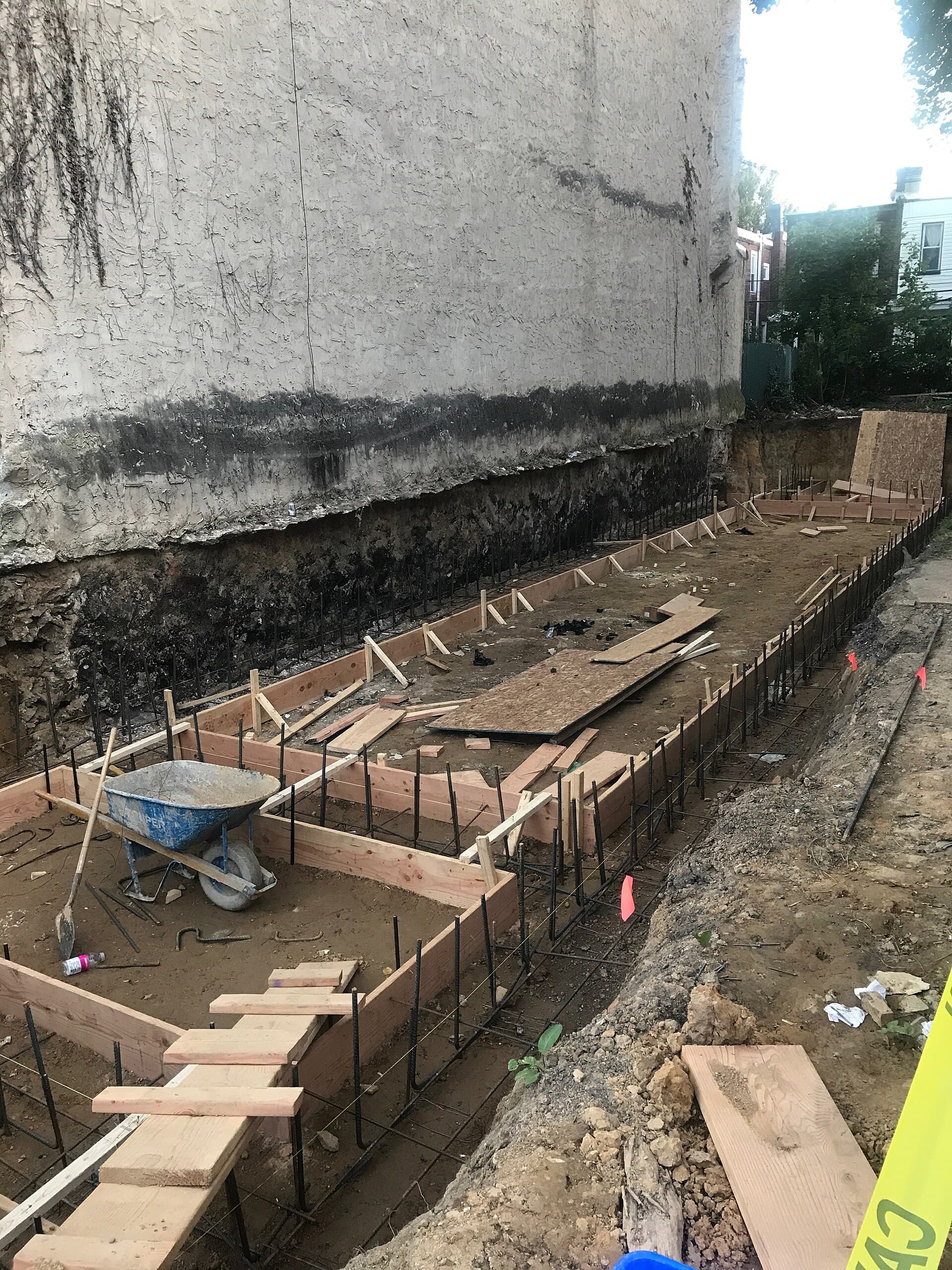
Look at the stakes. Look at the bracing. Look at the way the box meets the house, the fence and the existing path. A gap at the bottom of a board is a place for grout to escape and leave a honeycomb edge. A box that is only half nailed on a windy Merewether afternoon is a box that will move when the pump starts.
On a decorative job the box is also the edge you will look at for a decade. A ragged form leaves a ragged arris. If the finish matters, the carpentry matters. The decorative conversation starts here, not when the oxide is tipped in.
A tidy box is not a ready pour. The carpentry can be beautiful and the ground inside it still wrong.
Compaction is the part you cannot photograph later
A slab is only as honest as the thing it sits on. In this region that thing is often a thin layer of crushed rock over clay, fill, old demolition, or a mixture of all three left by a previous decade. If the base is loose, the concrete will look perfect on Friday and step on Monday.
Compaction is a plate, a roller, or a jumping jack working in layers, not a bloke walking around on the gravel. Moisture belongs in that sentence. Dust-dry crushed rock does not lock. Soup does not lock either. The aim is a damp, dense platform that does not take a boot print.
Hunter clay complicates the sermon. Some sites want the clay proofed and a designed thickness of granular material. Some want an engineer before anyone talks about a shed. Reactive clay is not a personality trait of the suburb. It is a reason the cheap pad becomes a cracked pad. If the house slab is the job, leave this essay and go to slabs and foundations. A waffle pod is not a driveway trick.
For a domestic driveway, what you should see is a consistent compacted base, extending under the thickening, with no soft pockets against the house. Leaves, timber offcuts and the neighbour’s compost are not structural fill.
Moisture on the day, not as a vibe
Concrete wants a damp base and a dry sky, which is the Hunter’s idea of a joke. A baked January base will suck water out of the bottom of the slab and give you a dusty, early crack. A winter hole that has been holding last Tuesday’s rain will bleed into the mix and give you a different failure.
If the base is dry and the day is hot, a light wetting — not a flood — is ordinary practice. If the box has water in it, you wait, you pump it out, you let the stone drain, or you cancel. There is no brave version of pouring into a puddle.
This is why season is a preparation question as much as a materials one. Summer wants shade, extra hands and a curing plan that starts before the surface goes quiet. Winter wants a later start, a longer set, and less faith in a “quick pour before the next band of rain”.
Services are already in the ground
Before You Dig Australia is the minimum. The plans it returns are a courtesy from other people’s records, not a guarantee that the pipe is where the line is drawn. On inner-Newcastle blocks the ground is a memoir: old gas, old water, a sewer that was rerouted in 1974, NBN that was trenched last spring, a stormwater line the last owner installed without telling anyone.
Peg, mark, and if the excavation is going near a known asset, pothole by hand. A bucket of a small excavator is a very expensive way to find a water main. A crossing over the verge is a very public way to find one.
Electrical conduits to a shed, gas to a barbecue, and the stormwater that is supposed to leave the new slab all need a plan before the mesh goes down. Sleeves through a thickening are ordinary. Afterthoughts chased into a green slab are how you get a crack that looks like a decision.
Washout is a designated place, not the gutter
A mixer arrives with leftover in the chute, the hopper and the tools. That leftover is alkaline, heavy and unwelcome in a stormwater pit that leads toward the harbour or the lake.
Prepare a washout: a lined hole, a purpose-built tray, a section of the site that will be cleaned and disposed of as waste, not as landscape. Tell the driver where it is before the first load. If the site is a terrace with no spare dirt, that is not an excuse to use the street. It is a reason to plan a portable solution.
Preparing the site includes preparing the ending. Slurry in the gutter is not a local custom.
Neighbours, access and the social weather
Inner Newcastle pours happen within a metre of someone else’s life. A pump occupying the street, a mixer blocking a driveway, a radio at half past six, and a wet edge against a shared fence are all foreseeable. Tell the neighbour. Not as theatre — as logistics.
Ask where they park, whether a hose can sit on their side for an hour, whether the dog will take an interest in an open gate. A crew that has done Cooks Hill before will do some of this instinctively. A homeowner still has to make the introductions.
Access is the other half. Where does the mixer stand? Where does the pump sit? What is the walking path for barrows if the pump fails? Is there a place to stack mesh that is not the footpath? Will a skip for old concrete block the only way out? These are cost questions as much as manners. A site that has not answered them will answer them at overtime rates.
If you have not yet chosen the crew, how to choose a concreter is the prior essay. A quote without a site visit is a guess about a week that has not started.
The rain plan
Have one. Write it down in the same thread as the booking. The Bureau can be wrong.
A rain plan is not “we will see how it looks at six”. It is: who calls the plant, by what time, who pays if the load is already batched, what cover is on site, whether the box can take a night of rain without collapsing, and whether a wet week means the job moves to Thursday or to next month. In this climate a cancellation is cheaper than a slab with a ruined face.
After a low, the ground itself may be the delay. Stormwater does not respect a diary. If the hole is holding the harbour’s weather, you are not being precious by waiting. You are being a person who has seen a clay site breathe.
What you should see the morning the truck is due
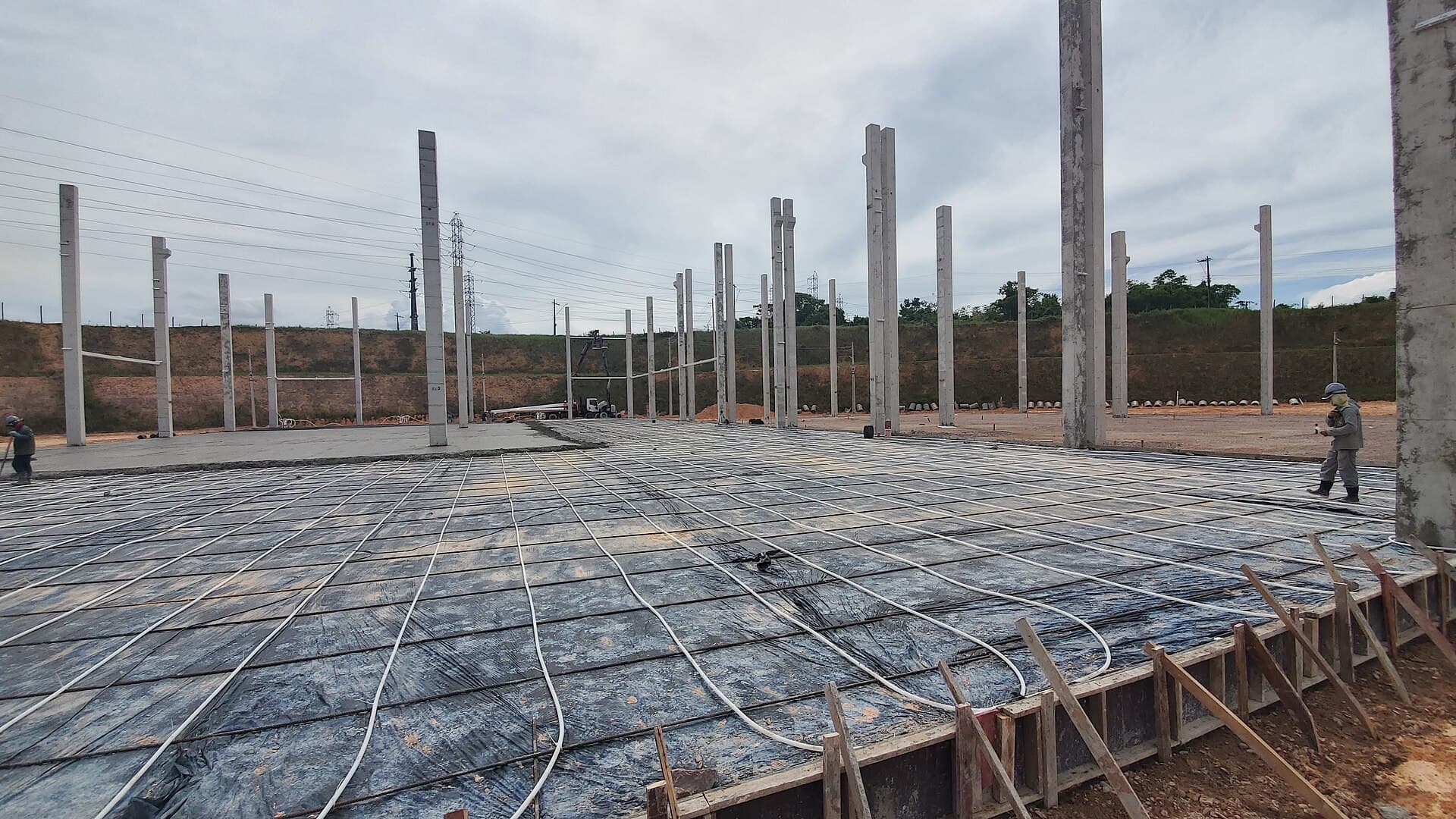
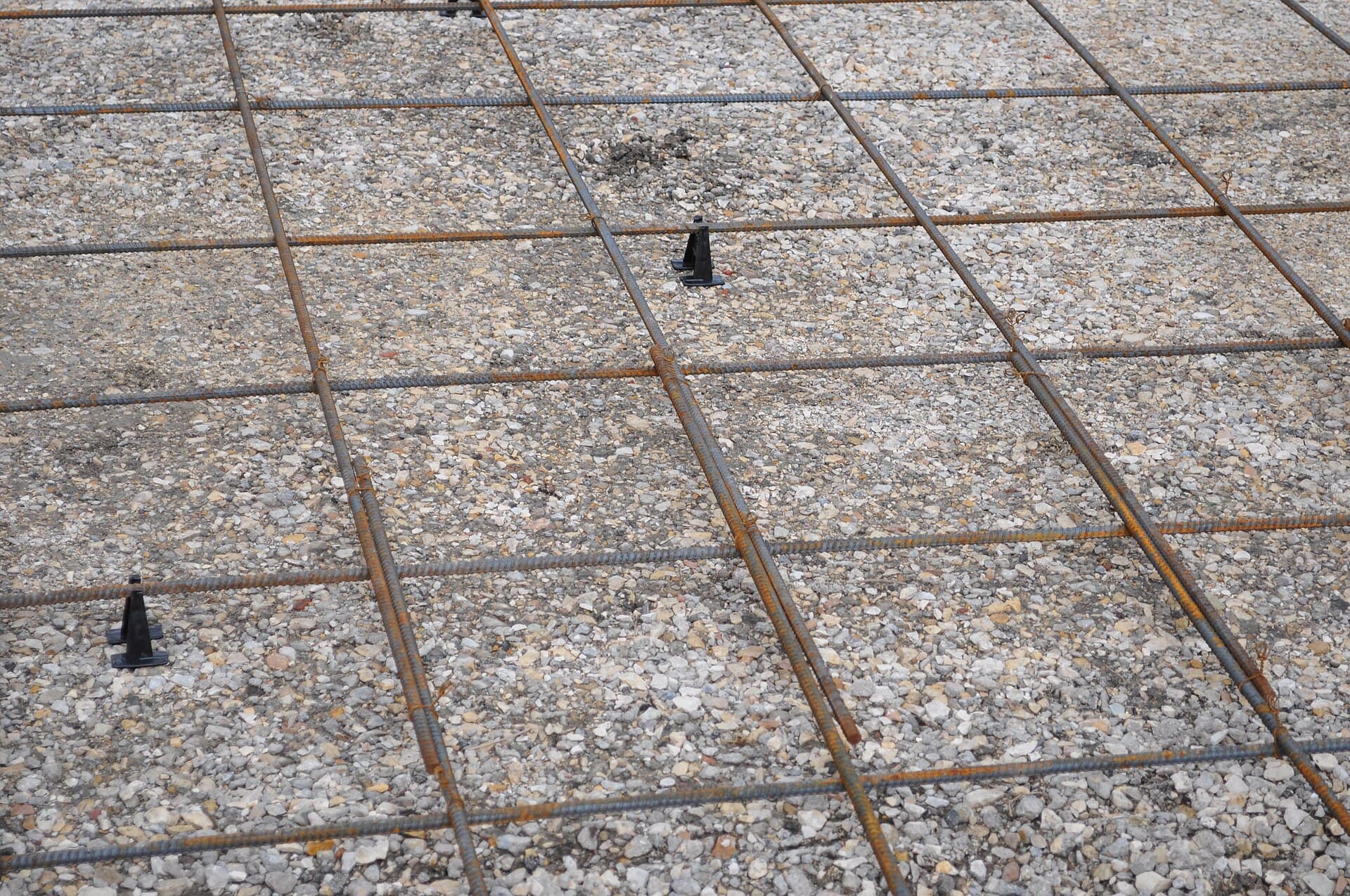
Pegs that still agree with the drawing. A box that is braced, clean and set to the right level. A base that is compacted and damp, not flooded. Mesh or bar on chairs, with cover you can measure, if the steel is already in — and if it is not, read reinforcement before you let anyone walk it into the mud. Services marked. Washout ready. Neighbour told. A sky you have actually looked at.
Then the mixer is interesting. The week that got you there is the work. The pour is just the hour the work becomes stone.